Insurance and Safety: Our Commitment to Secure Operations
 Public liability insurance and comprehensive safety planning are central to our approach to risk management. We maintain robust liability protection, ensuring that our clients, staff, and the public are covered in the unlikely event of accidental damage or injury. Our public liability cover is tailored to the nature of our work and regularly reviewed to keep pace with operational changes and legal responsibilities. Safety and insurance are not afterthoughts for us — they are core elements of every project.
We understand that clear documentation of our insurance arrangements helps build trust. Our liability insurance policies specify cover limits, exclusions, and the circumstances in which indemnity applies, and we ensure that these details are communicated to relevant stakeholders. In addition to standard liability insurance, we consider specialist covers where appropriate, such as professional indemnity or product liability for certain activities. Insurance & safety go hand in hand with proactive controls and trained personnel.
 Risk transfer through insurance is one layer of a wider safety ecosystem. We invest equally in prevention: workplace controls, safe systems of work, and ongoing training. Where insurance mitigates financial consequences, our safety processes are designed to prevent incidents in the first place. We regularly audit both our insurance arrangements and our safety performance to confirm alignment and adequacy.
Staff Training and Competency
Well-trained people are the most effective safety measure. Our workforce training program covers induction, role-specific skills, emergency response, and continual professional development. All staff complete mandatory safety modules before they undertake operational tasks, and refresher training is scheduled at regular intervals. We use a combination of classroom sessions, hands-on drills, and digital learning tools to reinforce skills and awareness.
 Training records are maintained for every team member and form part of our compliance framework. Performance assessments, toolbox talks, and supervisor checklists help ensure that knowledge translates into safe behavior on site. Competency is verified through observation and assessment, and any gaps trigger follow-up coaching or retraining until standards are met. By fostering a culture of continuous learning, we strengthen both safety and service quality.
We support staff with clear policies and practical resources. Supervisors are trained in incident investigation and root-cause analysis to prevent recurrence. Management-led safety briefings encourage open reporting and constructive discussion. This approach integrates staff training with our broader safety management system and supports the effectiveness of our public liability arrangements.
PPE and On-Site Protective Measures
Personal protective equipment (PPE) is provided and enforced where hazards cannot be fully eliminated. Our PPE program is based on hazard identification and follows national standards for selection, use, and maintenance. Items are supplied in the right sizes and are replaced according to manufacturer guidance or when damaged.
Standard PPE items include:
- Head protection: helmets and bump caps
- Eye and face: safety goggles and face shields
- Hearing protection: earplugs and earmuffs
- Respiratory protection: masks and respirators where airborne hazards exist
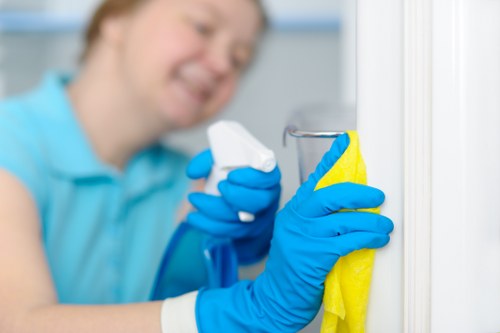
- Hand and arm: gloves matched to task and chemical exposure
- High-visibility and protective clothing: vests, jackets, and coveralls
- Foot protection: steel-toe or puncture-resistant boots
We also carry out regular fit checks, condition inspections, and replacement cycles. Appropriate PPE forms part of our site induction so that every visitor and contractor understands expectations before work begins. PPE is an essential complement to our engineering controls and administrative procedures.
Risk Assessment Process and Continuous Improvement
Our risk assessment process is systematic and practical. It begins with hazard identification and is followed by evaluation of likelihood and consequence. Controls are selected using the hierarchy of risk control: elimination, substitution, engineering controls, administrative controls, and finally PPE. Each assessment results in clear actions, assigned responsibilities, and target dates for completion.
 Assessments are recorded and reviewed at defined intervals or when work conditions change. For more complex activities we perform task-based risk assessments and method statements to document safe systems of work. Safety risk management feeds into our insurance review cycle so that cover levels reflect operational reality and emerging risks.
 We monitor safety performance through key performance indicators, incident reporting, and near-miss analysis. Lessons learned are disseminated across teams, and corrective actions are tracked to closure. This continuous improvement loop helps reduce incidents over time and supports the rationale for our public liability coverage strategy.
In summary, our insurance and safety framework is built on integrated elements: robust public liability insurance, comprehensive staff training, correct and enforced PPE, and a disciplined risk assessment process. We prioritize prevention, document our safeguards, and maintain insurance to protect stakeholders where residual risk remains. By combining financial protection with practical safety measures, we deliver reliable, responsible operations that value people, property, and reputation.
We continually review and improve these systems to adapt to new risks and to reflect lessons learned from industry best practices and regulatory developments. Our approach ensures that insurance and safety are not separate activities but complementary parts of a single, resilient safety management philosophy.